Radon Awareness Week 2026: Know Your Risk, Protect Your Health
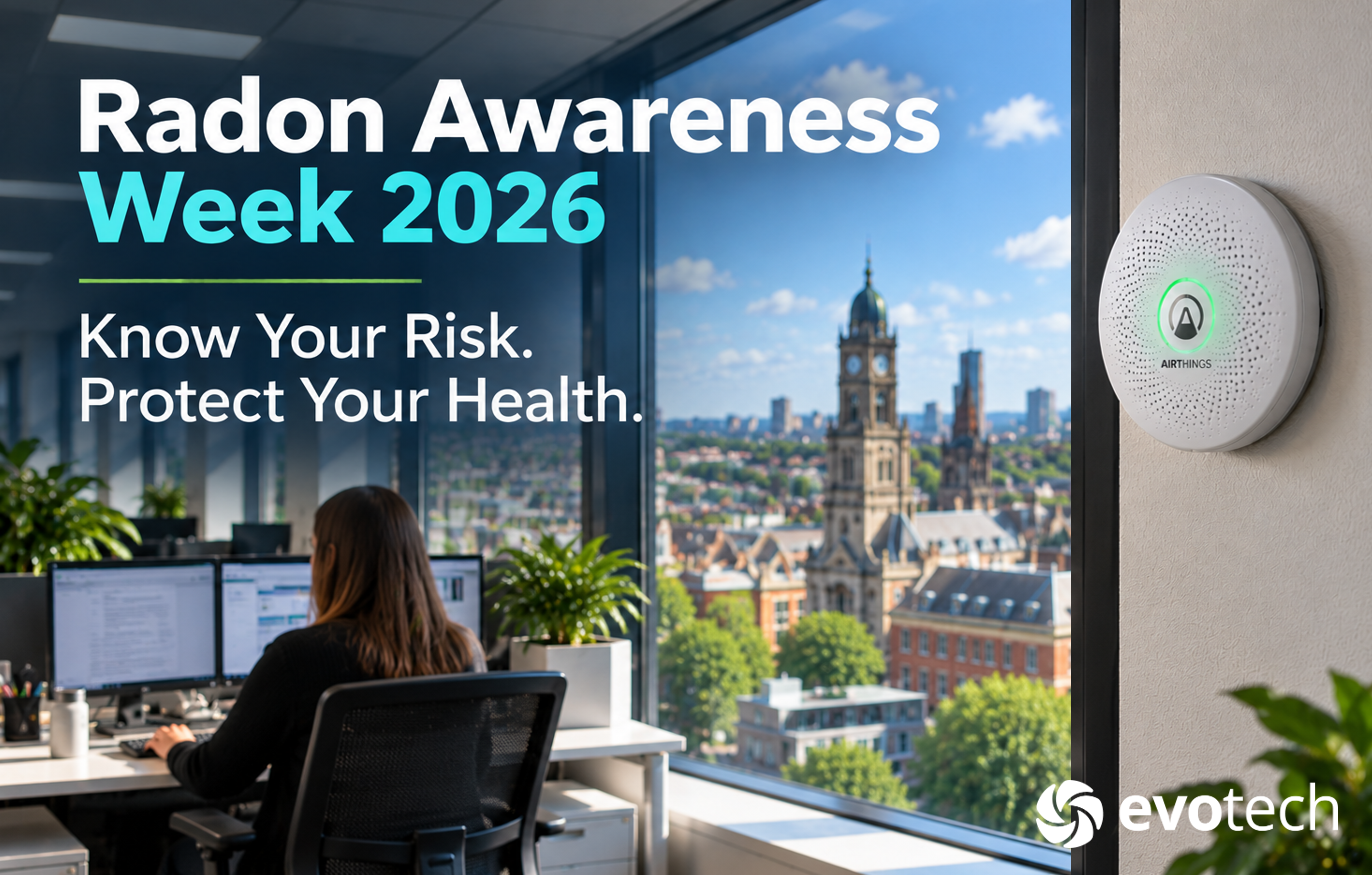
Radon is invisible, odourless and present naturally in the environment, yet prolonged exposure to elevated concentrations is the UK's second leading cause of lung cancer after smoking.
This year's UK Radon Awareness Week (2–8 November), organised by the UK Radon Association, is encouraging householders, employers and building managers to understand their risk, check the latest radon maps and take appropriate action to protect occupants.
Under the campaign message "Know Your Risk. Protect Your Health.", the association is highlighting how improved geological mapping has changed our understanding of radon exposure across parts of the UK, including areas previously considered relatively low risk.
Updated mapping reveals previously overlooked risks
Radon is a naturally occurring radioactive gas released from rocks and soil. It can enter buildings through cracks in floors, construction joints and gaps around service penetrations, potentially accumulating in enclosed or poorly ventilated spaces.
According to the UK Radon Association, long-term radon exposure is associated with approximately 1,100 lung cancer deaths in the UK each year.
The 2026 campaign highlights several locations where updated mapping has identified a greater likelihood of elevated radon levels, including parts of Leeds, Coventry, Brighton & Hove and Lincoln.
For example, the suburb of Farsley, west of Leeds, has seen its estimated radon risk classification increase from less than 1% to 5–10%, whilst some areas around Lincoln are now classified as having a greater than 30% probability of homes exceeding the domestic Radon Action Level.
These changes do not necessarily mean radon concentrations have increased. Rather, improved data provides a more accurate picture of where higher concentrations may occur.
For building owners and facilities managers, this reinforces the importance of reviewing current information rather than relying solely on historic property assessments.
Radon and workplace compliance
The Health and Safety Executive (HSE) requires employers to consider radon exposure as part of their workplace health and safety risk assessments.
Testing will generally be necessary in relevant ground-floor workplaces located within designated radon-affected areas and in regularly occupied basements or underground workplaces, regardless of geographical location.
Under the Ionising Radiations Regulations 2017, additional legal duties apply where the annual average radon concentration exceeds 300 becquerels per cubic metre (Bq/m³) in an occupied workplace, including requirements to manage exposure and notify the HSE.
Importantly, elevated radon levels are not restricted to older properties. Offices, schools, healthcare facilities, retail premises and other commercial buildings may all be affected, depending on their location, construction and ventilation arrangements.
Measuring and managing radon exposure
The only reliable way to establish radon concentrations within a building is through appropriate testing.
Radon levels can fluctuate with seasonal conditions, ventilation performance and changes to the building's operation. A structured approach to managing the risk should include:
- Checking the latest UK radon maps to establish whether premises are in an affected area
- Undertaking appropriate radon assessments and testing where required
- Reviewing results against relevant workplace exposure thresholds
- Investigating and implementing suitable mitigation measures where elevated levels are identified
- Reassessing concentrations following remedial works or significant changes to building use and ventilation
Depending on the building and the results of testing, mitigation measures may include improvements to ventilation, subfloor ventilation or specialist radon sump systems.
Continuous radon monitoring can also provide useful information about changing concentrations over time, supporting a more informed approach to ongoing building management.
Better building health starts with better information
At Evotech, we recognise that protecting building occupants requires an understanding of the indoor environment and the potential risks that cannot be seen.
Through our building health and indoor air quality services, we support building owners, managing agents and facilities managers with radon assessments, monitoring and mitigation advice, alongside wider environmental monitoring and building performance expertise.
As specialists in indoor air quality, Evotech Air Quality can deploy Airthings radon sensors to continuously monitor indoor radon concentrations 24 hours a day, seven days a week, providing building managers with valuable data to understand changing levels and identify potential exposure risks.
Radon Awareness Week 2026 is a timely reminder that the risks we cannot see should not be overlooked. Checking whether your property is in a radon-affected area, understanding the relevant workplace requirements and undertaking appropriate testing can help protect occupants and support long-term building safety.
For more information about radon monitoring and indoor air quality solutions, visit www.evotechairquality.co.uk or contact Evotech on 0333 207 4245.
Further information

Armistice Day 2026: Honouring service and sacrifice
Read More
Issue 2 of Evotech’s Building Performance Series Explores the Future of AI-Supported Building Management
Read More
Fire Door Safety Week highlights worrying generational gaps in fire door awareness
Read More
Evotech Technical Services Achieves Prestigious CIBSE Endorsed Organisation Status
Read More